
Capability
Pressure and integrity testing
Two independent recorders run on every test we perform. When one instrument is challenged, the other one has already answered.
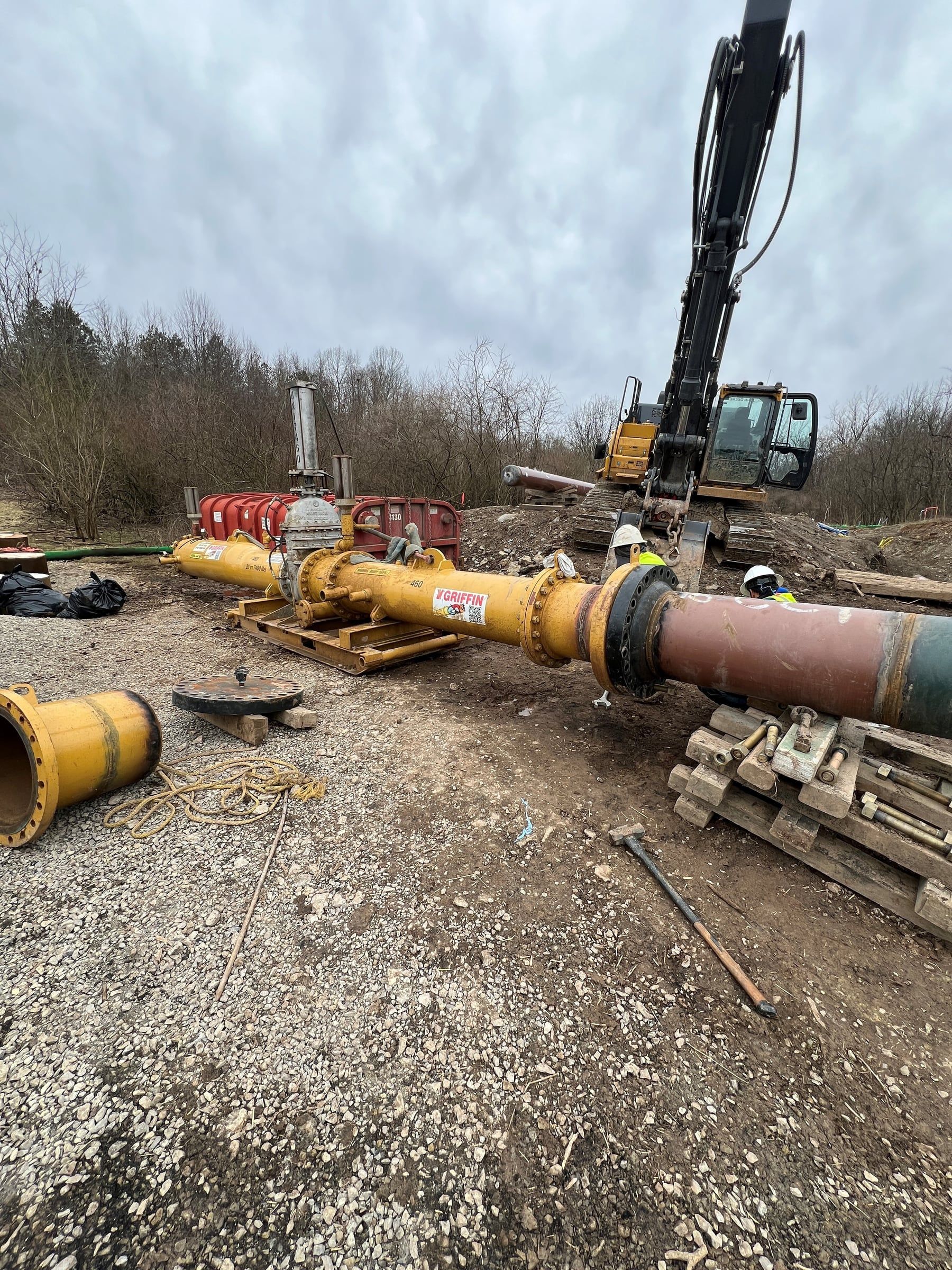
01
An instrument drops out at hour six of an eight hour hold, or the reviewer will not accept the only chart you have.
Two independent recorders, one test
Most vendors bring one instrument. If it fails, or if a reviewer challenges the record it produced, the test is repeated. That repeat lands on your cost code and your schedule, and the line stays down while it happens.
A Barton 12 inch dual pin chart recorder and a Crystal nVision digital data logger run simultaneously on the same test, on separate power and separate clocks. An analog deadweight stays in the kit because certain standards still call for one and will not accept a digital substitute.
The two records are independent. They corroborate each other, and a failure in one does not cost you the hold.
You receive the physical chart, the exported digital log, and the current calibration records for both instruments.
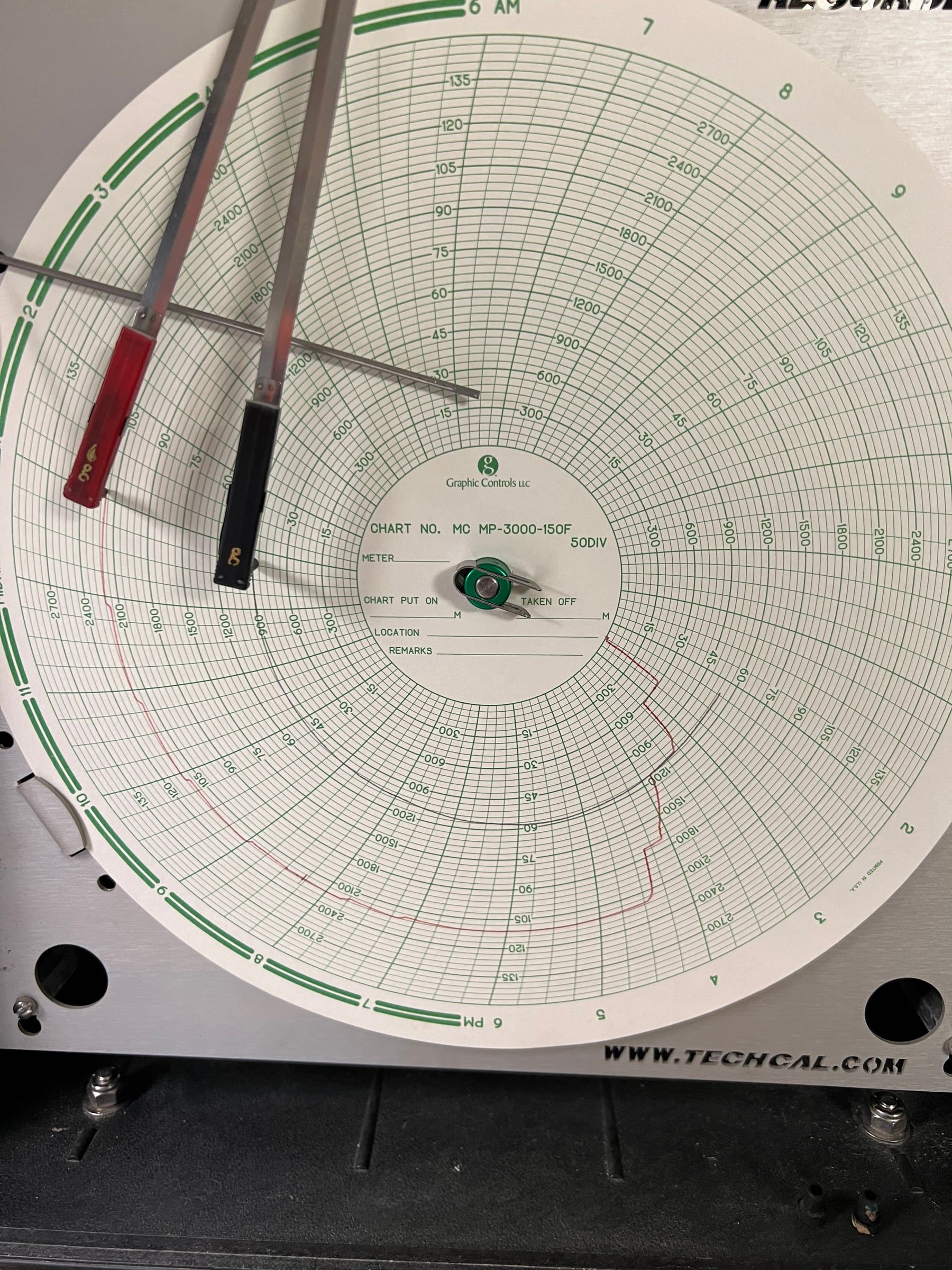
On every test
- Barton 12 inch dual pin chart recorder
- Crystal nVision digital data logger
- Analog deadweight reference
- All instruments recertified every 6 months
02
The fill water has to come from somewhere, go somewhere afterward, and not freeze in between.
Hydrostatic testing
Water sourcing, metering, and disposal are usually the parts of a hydrostatic test that slip. We bring the fill pumps and meter the fill rather than estimating it, so the volume in the line reconciles against the calculated volume before the hold ever starts.
Tests run at 1.5 times maximum operating pressure as a rule, and holds typically run 4 to 8 hours depending on the line and the standard being satisfied.
Chart, digital log, and a fill volume that reconciles against the calculated line volume.
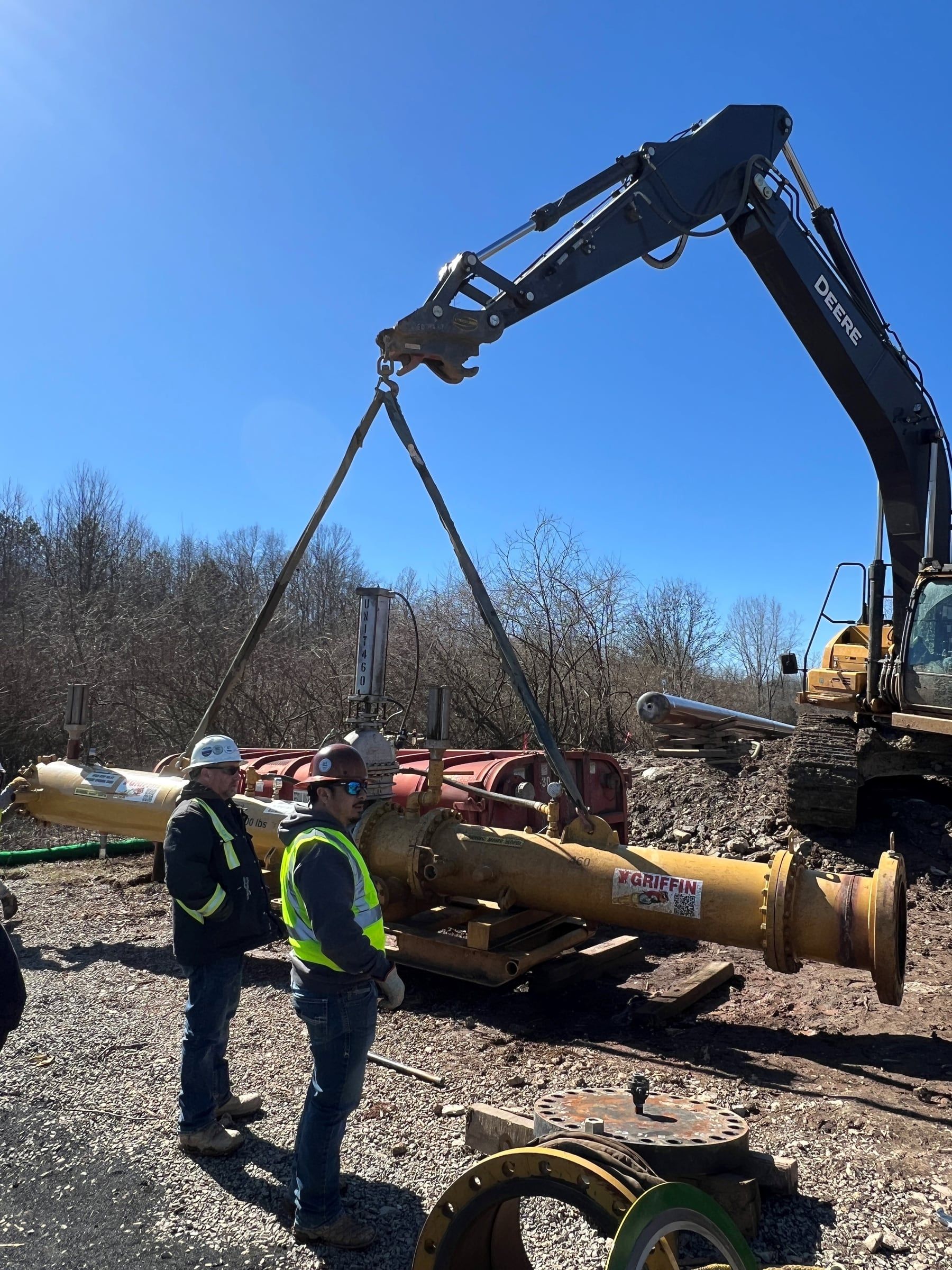
Rigged in with
- 40 GPM triplex test pump
- Water fill pump
- Badger flow meter for fill and displacement volume
- Test heads and manifolds fabricated to the line
03
The line cannot see water. It is corrosion sensitive, there is no disposal path, it is below freezing, or the location will not tolerate a spill.
Nitrogen testing
When water is the wrong medium, the test runs on nitrogen from our own cryogenic pumper unit. Rate range runs 48,000 to 720,000 SCFH against a maximum of 8,900 psi, so the same unit covers a short tie in and a long run.
Nitrogen leaves nothing behind to remove afterward, which matters on a line that is going straight into service.
The same two independent records, and a line that needs no dewatering before it goes into service.
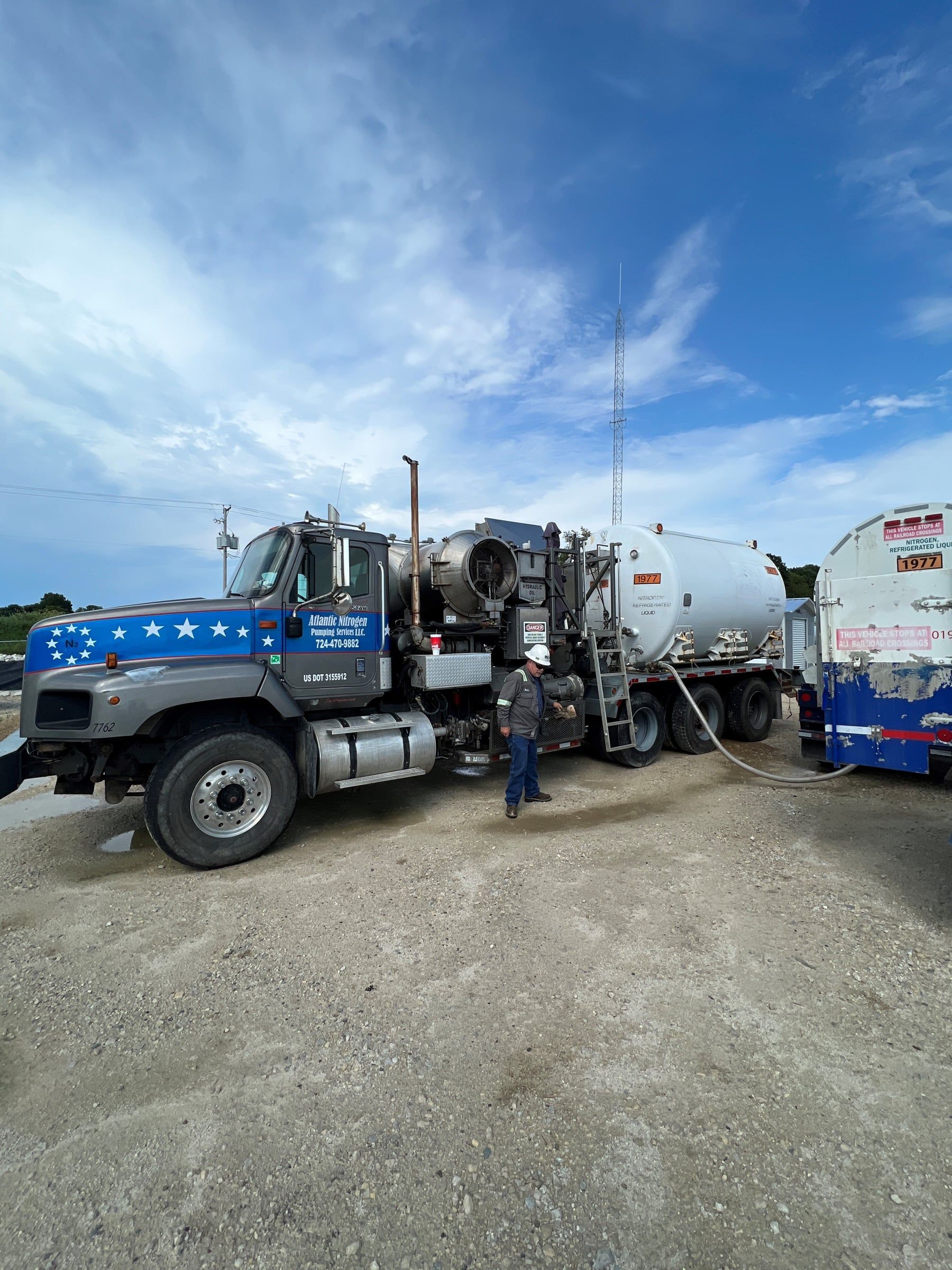
Rigged in with
- Cryogenic pumper unit, 48,000 to 720,000 SCFH
- Maximum pressure 8,900 psi
- Tube trailers, 21,000 to 81,000 ft³
- Same dual recorder package as every other test
04
The test window falls in February, and the site is three hours from anywhere.
Winter and remote work
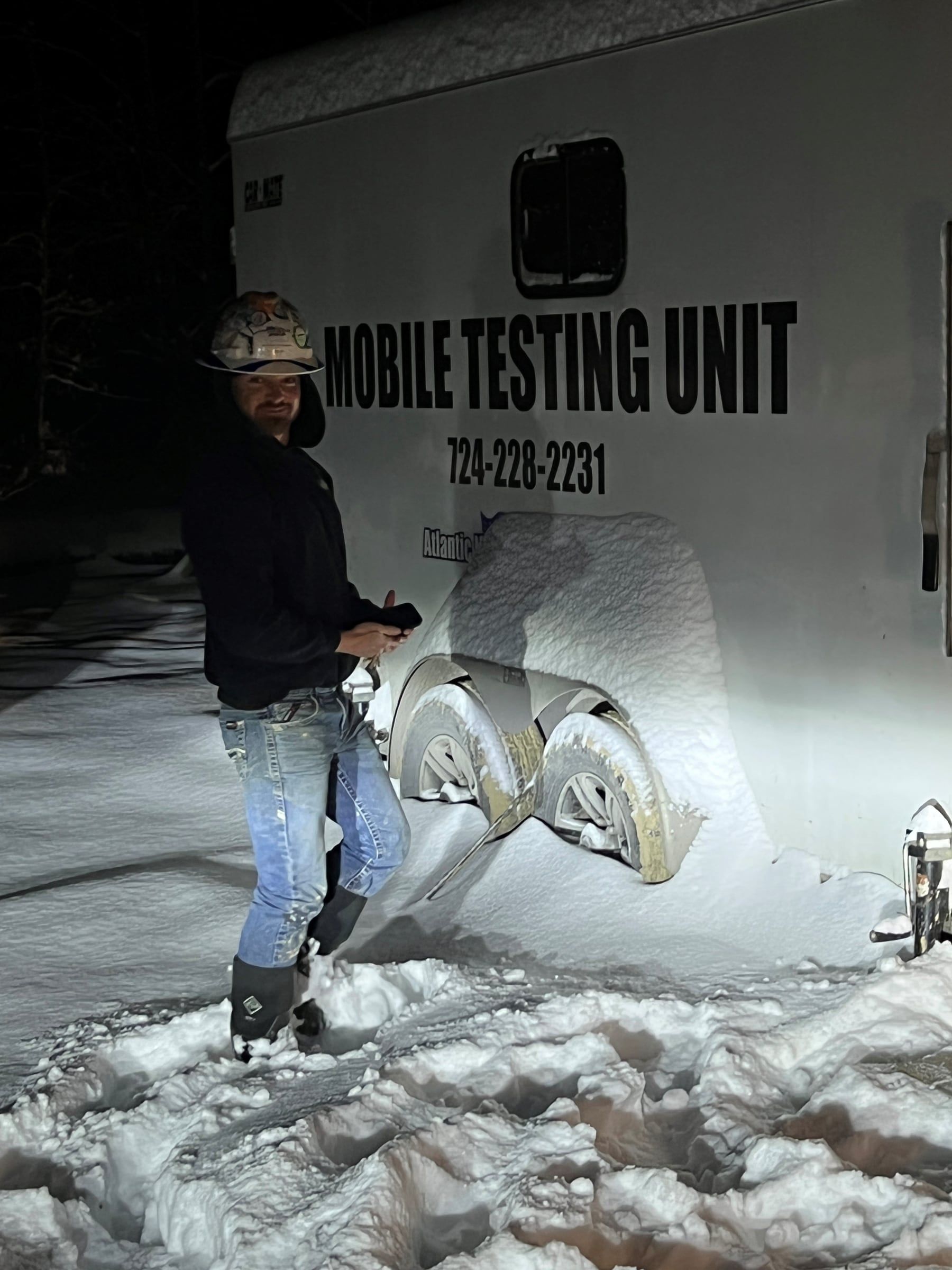
Cold weather work is normal here, not an exception that gets priced as one. We have run hydrostatic tests in deep snow, including a job in St. Marys, Pennsylvania.
Washington, Pennsylvania is roughly thirty minutes from Pittsburgh and from both the West Virginia and Ohio borders, so mobilization to most of the Marcellus and Utica core is a same day matter rather than a multi day one.
A crew on site inside the window you were given, not the one after it.
Straight answers
The four questions
Can you handle my specific complication?
Lines that cannot take water, tests in freezing conditions, remote pads, and lines with no permanent test connection. Test heads and manifolds are fabricated to the line rather than pulled from a standard kit.
What happens when something goes wrong mid job?
Two independent recorders are already running. A failure in one instrument does not void the hold or trigger a repeat at your cost.
What do I walk away holding, and will it survive an audit?
The physical Barton chart, the exported Crystal nVision log, instrument calibration records dated inside the 6 month recertification interval, and the volume reconciliation.
Can you be on site when I need you?
Washington PA is roughly thirty minutes from Pittsburgh and from both the West Virginia and Ohio borders. We own the gas, the trailers, the pumps, and the crews, so there is no third party schedule between your date and ours.
Equipment on this work
What shows up on the pad
Barton 12 inch dual pin chart recorder
Two pens on one 12 inch chart, pressure and temperature on the same time base. The chart is a physical artifact that leaves site with the job file.
| Chart diameter | 12 in |
|---|---|
| Pens | Dual pin |
| Record type | Analog, circular chart |
| Recertification | Every 6 months |
Crystal nVision digital data logger
Runs on the same test as the Barton, on its own power and its own clock. Exports a timestamped log for the integrity file.
| Record type | Digital, timestamped log |
|---|---|
| Output | Exportable data file |
| Independence | Separate power and clock |
| Recertification | Every 6 months |
Analog deadweight tester
Kept because certain standards still call for a deadweight reference and will not accept a digital substitute.
| Type | Analog deadweight |
|---|---|
| Use | Reference calibration |
| Recertification | Every 6 months |
Badger flow meter
Meters volume pumped so fill and displacement volumes reconcile against the calculated line volume.
| Measures | Pumped volume |
|---|---|
| Use | Fill and displacement reconciliation |
| Recertification | Every 6 months |
Next step