
Capability
Cryogenic nitrogen pumping
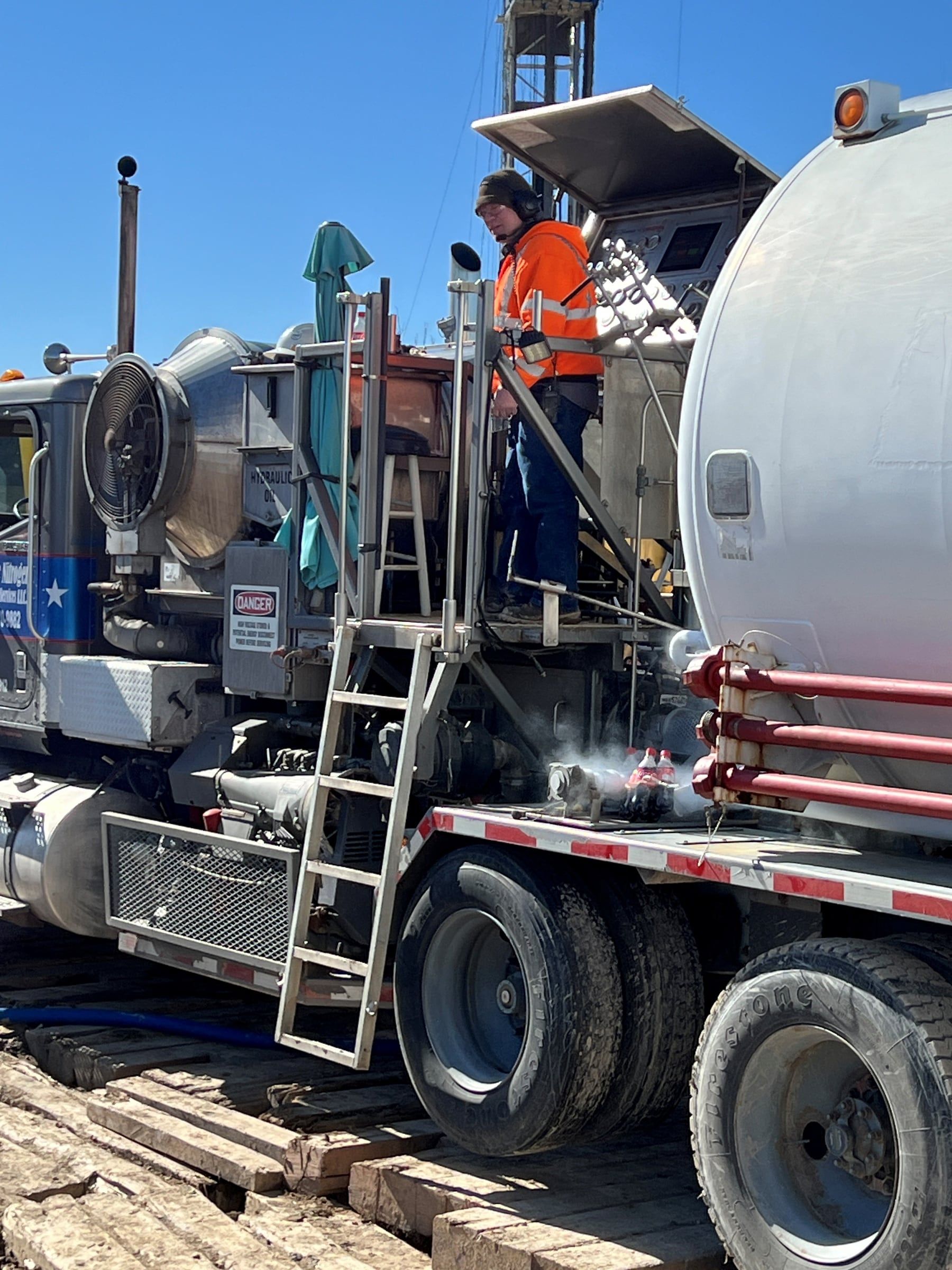
720,000 SCFH and 8,900 psi in a unit that still fits down a lease road.
01
The line was never built to be pigged. There is no launcher, no receiver, and no budget to weld one on.
Pigging lines that were never built to be pigged
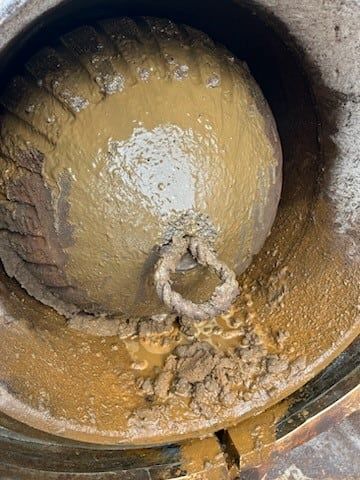
This is the call we get most often from construction managers, and it is a solved problem. We fabricate a bell piece that fits over the opening and acts as a launcher, so the line gets pigged without permanent modification.
The compressor comes with the run. Foam and poly pigs for cleaning and displacement, gauge pigs to prove the bore, brush pigs for scale and weld slag, and smart or MFL pigs when the run is an inspection.
A pigged line, the returned pig, and the gauge plate if the run was a proving run.
Available on the run
- Bell piece launcher for lines with no launcher or receiver
- Foam and poly pigs
- Gauge pigs
- Brush pigs
- Smart and MFL pigs
- Compressor provided
02
Everyone on the bid list will tell you the line is dry. One of them can hand you the number.
Verified dry, not claimed dry
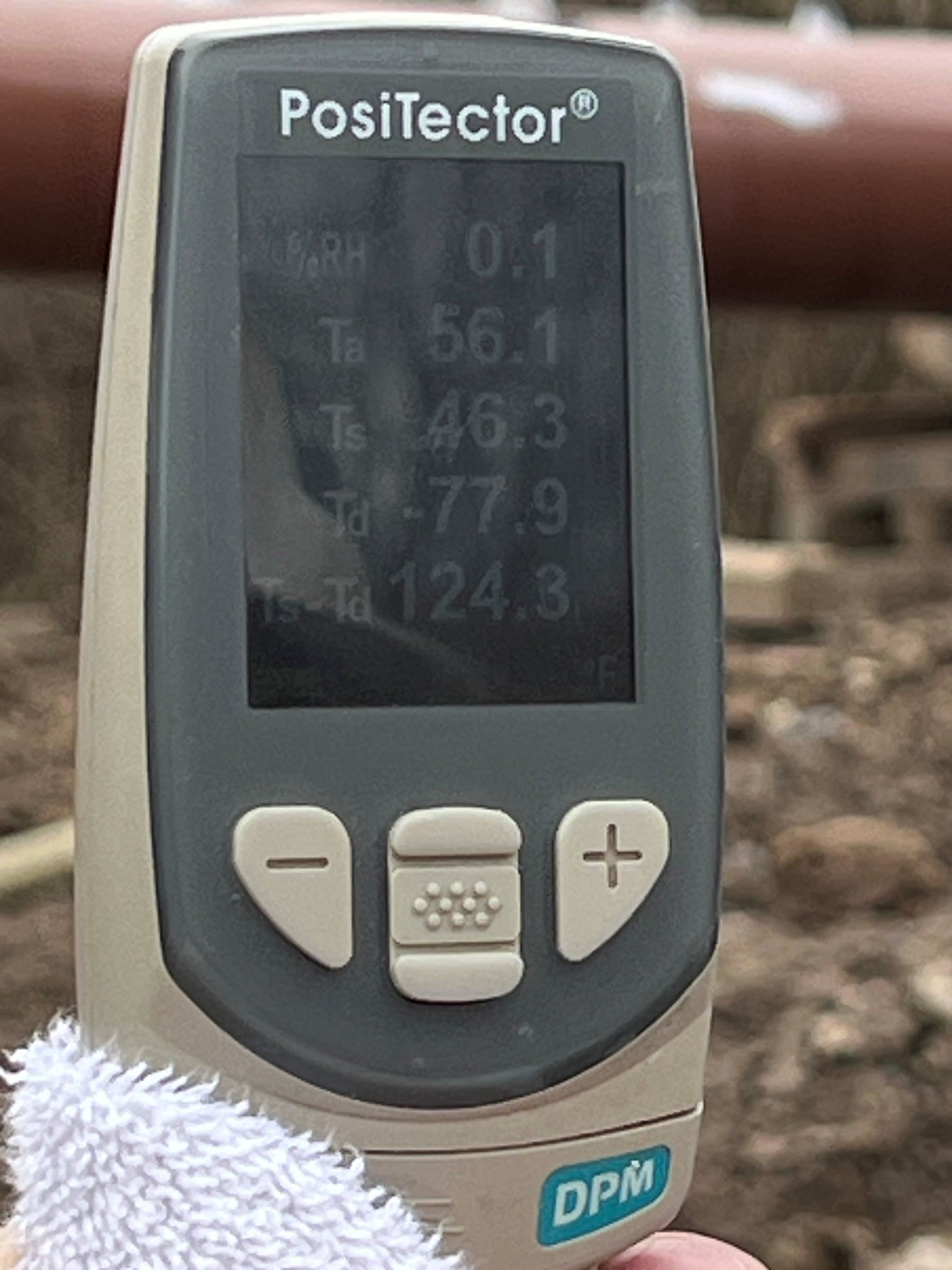
After a hydrostatic test, the water that matters is the water you cannot see. We dry with nitrogen to a negative dew point and measure the result with a DeFelsko dew point meter that reads to minus 100°F.
The reading is taken at the sample point and logged. If the line does not meet the number, it goes back on nitrogen until it does.
A logged dew point reading with the job file, not an assurance in an email.
Measured with
- DeFelsko dew point meter, reads to −100°F
- Nitrogen dried to a negative dew point
- Reading logged at the sample point
03
There is product, slag, or hydrotest water in a system that has to go live, and air is not an option.
Purging, displacement, and packing
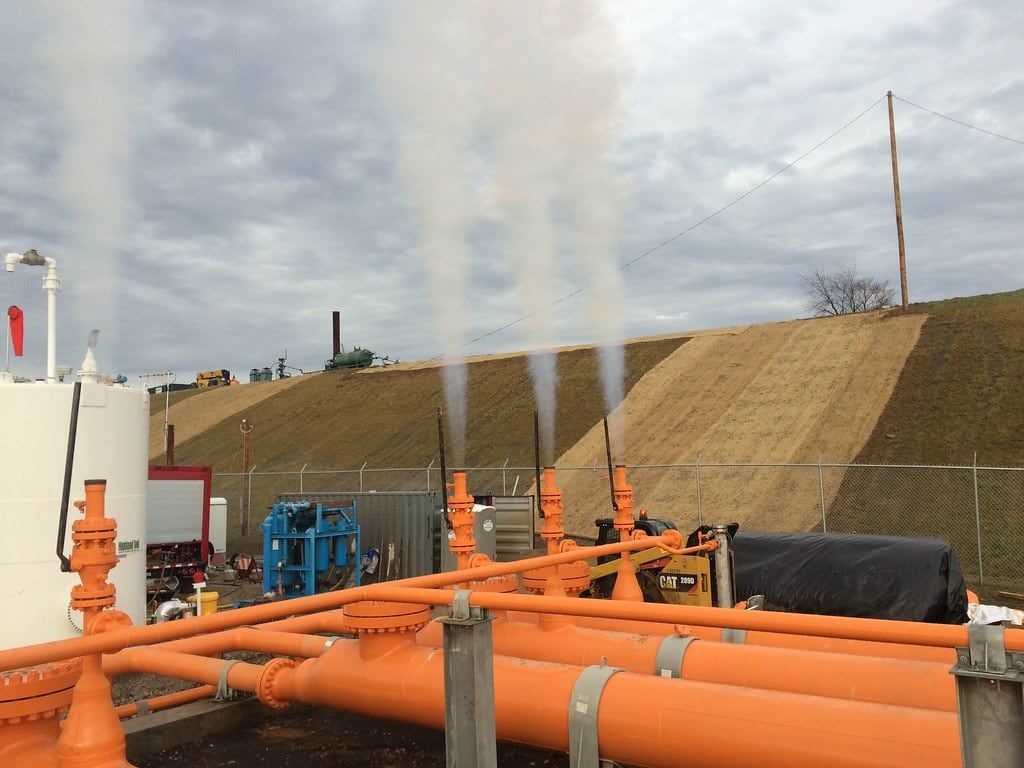
Live gas systems cannot be purged with air. Nitrogen displaces what is in the line without introducing a flammable mixture, which is the whole reason the medium is worth paying for.
The same unit packs and blankets systems that need to sit under inert pressure between phases, and it runs the dewatering after a hydrostatic test rather than handing that step to somebody else.
A system that is inert, dry, and documented at each step it passed through.
Covered by the same unit
- Purging and displacement
- Dewatering after hydrostatic test
- Drying to a negative dew point
- Pressure packing and nitrogen blanketing
- Nitrogen jetting and well cleanout
- Gas lift and temperature management
04
The unit that can hit your rate will not physically reach the pad.
Sized for the contradiction
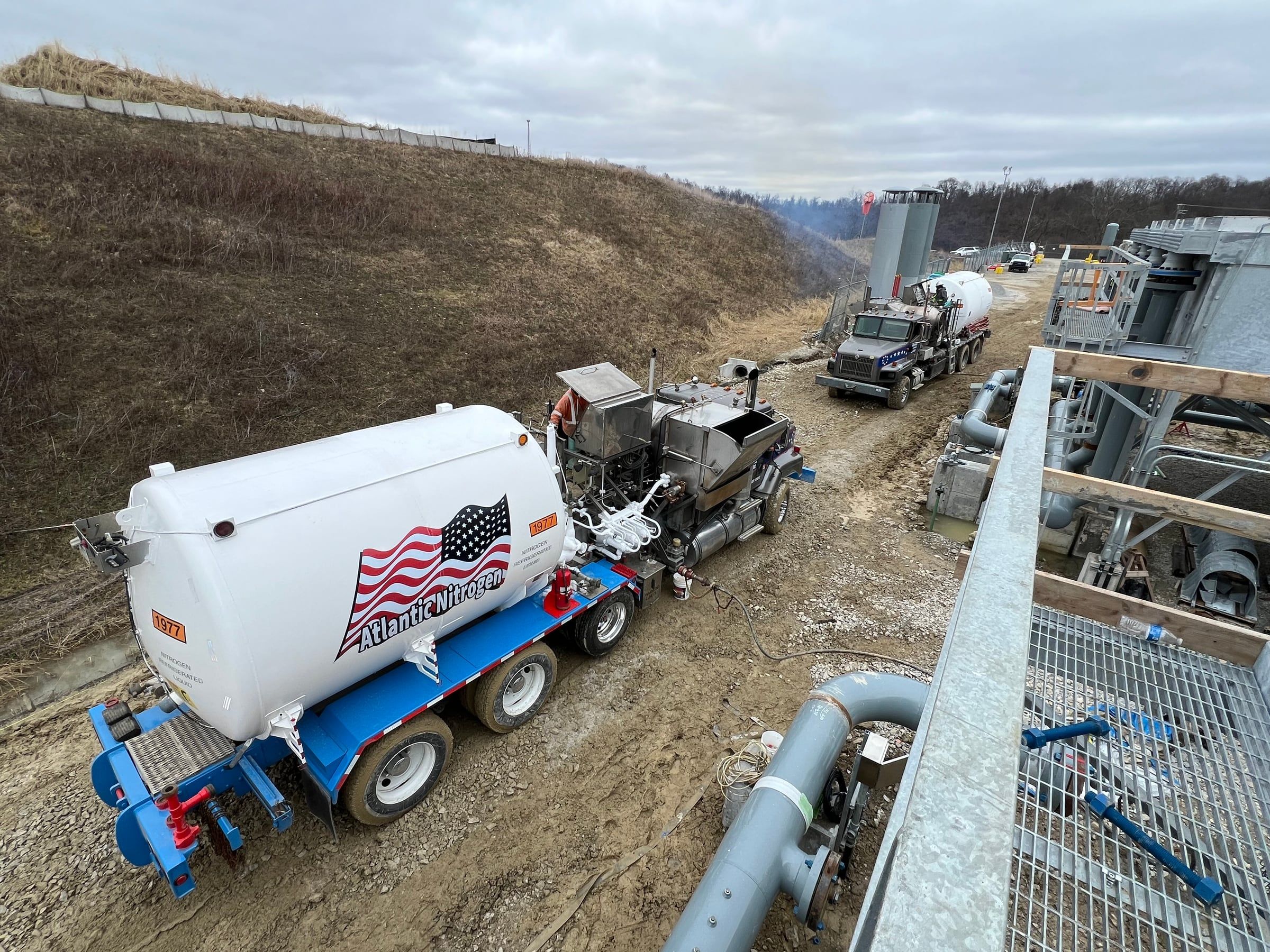
Capacity and access usually pull in opposite directions. The pumper unit is 38 feet long, 8 feet 2 inches wide, and 12 feet 5 inches high, carrying 3,300 gallons of liquid and covering 48,000 to 720,000 SCFH up to 8,900 psi.
That is a unit that reaches remote locations on the roads that actually exist, and still has the rate to do the work once it arrives.
One unit on the pad instead of a staged convoy.
Straight answers
The four questions
Can you handle my specific complication?
Lines with no launcher or receiver get a fabricated bell piece. Live gas systems get nitrogen rather than air. Remote pads get a unit that is 8 feet 2 inches wide.
What happens when something goes wrong mid job?
We own the gas, the unit, and the operators, so a fix does not wait on a third party dispatcher. If a dry does not meet the dew point, the line goes back on nitrogen before we leave.
What do I walk away holding, and will it survive an audit?
Logged dew point readings, the returned pig and gauge plate where the run calls for it, and the volume and pressure records from the unit.
Can you be on site when I need you?
One call books the gas, the trailer, the pump, and the crew together. There is no brokered link to slip.
Equipment on this work
What shows up on the pad
Cryogenic nitrogen pumper unit
One unit covers the rate range and the pressure range, and still fits down a lease road.
| Rate range | 48,000 to 720,000 SCFH |
|---|---|
| Maximum pressure | 8,900 psi |
| Maximum temperature | 350 °F |
| Liquid capacity | 3,300 gallons |
| Overall length | 38 ft |
|---|---|
| Overall width | 8 ft 2 in |
| Overall height | 12 ft 5 in |
| Weight, empty | TK lb |
| Weight, full | TK lb |
DeFelsko dew point meter
Reads to minus 100°F. The number it returns is what turns a dry line from a claim into a record.
| Range | Reads to −100 °F |
|---|---|
| Measures | Dew point, relative humidity, surface and air temperature |
| Output | Logged reading for the job file |
| Recertification | Every 6 months |
Pigs and launching
| Foam and poly pigs | Cleaning, drying, and product displacement |
|---|---|
| Gauge pigs | Proving bore and confirming the line is clear for inspection |
| Brush pigs | Scale, mill scale, and weld slag removal |
| Smart and MFL pigs | In line inspection runs |
Compressor supplied with the run. For lines with no launcher or receiver, a bell piece is fabricated to fit over the opening and act as a launcher.
Next step